Showing posts with label Army Reserve. Show all posts
Showing posts with label Army Reserve. Show all posts
Monday, July 30, 2012
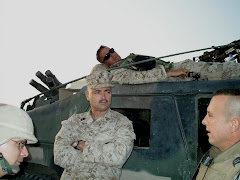
Call me re-energized - I got news from Afghanistan - from my Daughter who is serving there. As you can see in the picture, she decided that even though she is a Reservist with 5 years service and two deployments (one to Iraq and this one)that she would re-enlist.
Of Course I am very proud of her decision. I pray for her safe return in several week. She faces a period of change for the Army Reserve. Will the benefits be better for her? (at least one is, she can retire at 58 due to her deployments) Will the retirement system be a real benefit to her. Will this country honor the committments made to her as she has done in return? I wish her a great career...


Tuesday, February 23, 2010
Guard and Reserve Retirement Conference

The National guard is hosting a conference for its retirement Services Offeicers (The Army Reserve does not have such a person - yet- To jumpstart the flow of information between the National Guard Bureau and the states on retirement services, the Soldier Family Support and Services branch will convene March 1-5 in Savannah, Ga.
Geared toward the full-time program managers and state retirement services officers. The focus of this conference is to distribute information via stats to guard soldiers, notify soldiers of changes in policy, as well as things to think about for the future.
This conference also deals with the Army-wide certifications required of all retirement services personnel.
As noted by the conference organizers there are individuals that work pieces [within the retirement process], but there is not a retirement branch for Reserve components. Considering the gap in retirement or separation from the guard and reserve and the eventual reciept of retirement pay may be 20 years or more that would seem counter intuitive to efficient processing.
The conference isn't only for Soldiers in the Army Guard. The Army Reserve will also participate.
The Army Reserve does not have the structure that the guard has at state level, in fact, the Army Reserve does not even have RSOs in the structure. This conference offers an opportunity to try to get that developed.
You can get an excellent primer on Guard and Reserve retirement from The Army G-1 who has published an Army National Guard information guide regarding non-regular retirement. http://www.arng.army.mil/soldierresources/Documents/ARNG%20Information%20Guide%20for%20non-regular%20retirement%2015%20Apr%202009.pdf
Monday, February 22, 2010
How is your pay, soldier?

From the Stars and Stripes – this news item on the cancellation of the Defense Military integrated personnel transaction system - a system to update soldier records and pay:
After spending $1 billion and 12 years of effort, Defense officials have pulled the plug on a hapless plan to bring the four military branches under a single payroll and personnel records system.
"This program has been a disaster," Adm. Mike Mullen, chairman of the Joint Chiefs, told the Senate Armed Services Committee earlier this month. He said he applauded the decision to kill what proponents said would be the largest, fully-integrated human resource system in the world.
Well – interesting in its implications to deploying Reserve and National Guard soldiers. Many of us suffer problems when we deploy – as noted :
More than time and money had been lost, however. Military personnel, particularly Guard and Reserve members, increasingly have been frustrated by pay and personnel record errors. The Commission on the National Guard and Reserves urged two years ago that a single, integrated pay and personnel system was needed "as soon as possible" to rectify inadequacies in fragile legacy systems.
More than 90 percent of Army Reserve and Guard soldiers activated to serve in Afghanistan and Iraq through 2003 reported significant pay errors. Aggressive actions were taken to lower that rate but without the benefit of what was needed — a modern payroll system that no longer treated active and reserve component members differently.
Can you believe that – up to 90 percent pay errors for guard and reserve soldiers… such a dedicated workforce that bears this for years while waiting for a solution…now we are starting all over. Having been at the pay problem window myself, I can tell you it makes it hard on guard and reserve soldiers, but they are not in the service for the money. Lets hope a simple and effective solution can be found soon. You can find the entire stars and stripes article here.
Tuesday, January 26, 2010
LTG Helmly on the 98th Division Deployment
.JPG)
Found an Article about the 98th Division’s deployment to Iraq. (This is the unit I deployed with in Sep 2004) This deployment was discussed as a pivotal and sea state change deployment for the Army Reserve by the USAR Commander at the time LTG James R. Helmly.
As a side note -I had the opportunity to work for General Helmly when he was the 78th Division Commander where I was the senior Civilian for the 1st Brigade at the time. He was a no nonsense commander that worked thru all obstacles. I recall staff meetings where he regularly dammed the bureaucracy and insisted on getting tasks done quickly.
Here is some of the Combat Studies Institutes interview with LTG Helmly as it related to our deployment:
When the 98th Division (Institutional Training) deployed to Iraq in 2004-2005, Major General James R. Helmly was the chief of Army Reserve and commanding general of United States Army Reserve Command. In this interview, focusing on the 98th’s deployment and conduct of its Iraqi Army training and advisory mission and related larger issues, Helmly relates how early on he saw a need to reconstitute the Iraqi forces, a chronic shortage of US Special Forces to train them, and thought to himself, “Why can’t we use our table of distribution and allowances organized institutional training divisions and training support divisions?” The biggest problem he encountered in developing this idea was actually resident in his own staff. “That is, they kept coming back with the schoolbook answer. So we had a ‘Come to Jesus’ meeting one day and I slammed the door and said to them, ‘Goddamn it! Let me make it abundantly clear what we’re going to do….You could sort of see the eyes opening on these guys and they finally understood.” After the concept was briefed and accepted, Helmly states that another group of problems arose from “this bastardized system of request for forces (RFF). Instead of being given
a mission or a task with commander’s intent and then allowing the units to generate the capability,” he explained, “we went to a bastardized thing off the back of some sloppy envelope for an RFF that was frankly just very cumbersome. It really tied our hands in terms of the flexibility of putting together a task organized unit of the 98th.” As the deployment of the 98th to Iraq proceeded, its employment varied considerably from his original concept. According to Helmly, “My original initiative was to use them in a training base capacity inside a foreign army…. What occurred, though, was that many of the 98th became embedded trainers inside Iraqi units.” Even so, he added, “the 98th soldiers did all very well and I admire and respect them greatly for that.” Helmly also notes that Iraq has focused the US Army on details, that the needs of “the long war” have been neglected, that the current method of foreign military sales and assistance is broken, and that an organization dedicated to training foreign militaries needs to exist. What’s more, personal agendas and institutional inertia contribute to these challenges.
With regard to the 98th Division deployment – LTG Helmly was asked what happened after the unit was deployed:
General Helmly: I visualized the FA-TRAC deploying and establishing a deployed version of an institutional training base. I saw us establishing a Fort Benning, Georgia or a Fort Knox, Kentucky inside Iraq and training civilians to become soldiers. What occurred, though, was that many of the 98th became embedded trainers inside Iraqi units. When I was a young private, when my unit was completing basic combat training it was announced that one of the drill sergeants I had was going to deploy as a platoon sergeant to Vietnam. A couple years later, I learned he had been killed – and he had been a very fine noncommissioned officer (NCO). The point of this is: everyone knows that the ultimate objective of any soldier is to engage in ground combat, but I thought the 98th would essentially do a training base kind of thing. But what actually happened was that many of these outstanding soldiers found themselves embedded inside Iraqi units. As a result, there were several who were killed or wounded in action who were operating more or less as advisors rather than trainers in a training base capacity. Had I known that, I wouldn’t have argued against using the 98th, but I would have understood things better from the beginning. My original initiative was to use them in a training base capacity inside a foreign army. After all, one of the things we’ve learned in this war is that clerks, cooks and truck drivers all have to be prepared to fight as infantrymen. I have to say, though, that the 98th soldiers did it all very well and I admire and respect them greatly for that.
The entire interview is fascinating reading – anyone with an interest in the workings at the Department of Army Level in 2004 and the revolutionary deployment of a training unit to the warzone to train and support the Iraqi Army under LTG Petraeus will want to scan the document found here. http://cgsc.cdmhost.com/cdm4/item_viewer.php?CISOROOT=/p4013coll13&CISOPTR=333&CISOBOX=1&REC=7
And – thanks LTG Helmly – for the compliment to our unit at the end… and for the confidence in our 98th Division soldiers –
Interviewer: The first part was your assessment of the 98th’s experience and performance over there.
LTG Helmly: I think due to the ability, willingness and courage of the individual soldier and small groups of soldiers, it was a success. That is the cornerstone of success. It proved we could take an organization that was not designed to deploy, put it into a significantly different set of conditions, and the small units and lower-ranking leaders would cause it to succeed. I think they added great capability and I was extremely impressed with them. It’s a tremendous group of soldiers. I saw many of them off before they left and they were positive. There wasn’t any talk of why they had to go do this mission. Of course they harbored their own personal fears as individual soldiers, but they were very proud. By the way, people tend to put stereotypes on things. A lot of people said we were just weekend warriors and things like that. Well, a lot of that first group of the 98th that deployed were drill sergeants and officers who had a lot of active duty time and commanded MTOE formations. They were really a high-speed group of capable and professional leaders. They were excited about the ability to buy into training and building up the Iraqi Army. Nobody was awarded the Congressional Medal of Honor but there were a lot of heroes out there who didn’t get accorded that honor but who were nonetheless heroes in their own right. They suffered some pretty serious casualties. It was some really significant and outstanding history.
Friday, January 22, 2010
MNSTC-I cases its colors

My unit in Iraq has ceased operations – this information from Army describes the inactivation which occurred on New Year’s Day;
Lt. Gen. Michael D. Barbero, commander of Multi-National Security and Transition Command-Iraq commander rendered final honors and cased MNSTC-I’s colors, signifying the commands’ official inactivation.
“Though we are activating a new headquarters today,” said Odierno, USF-I commanding general, “the support we give our Iraqi partners will be no different than they received under MNF-I.”
MNF-I was established May 15, 2004, taking over command for Combined Joint Task Force 7 to handle all strategic-level operations for coalition forces contributing to OIF.
“Troops from 30 different countries served in the Multi-National Force-Iraq,” Air Force Maj. Dennis Kruse, master of ceremonies, said at the ceremony. The major subordinate commands included MNC-I, MNSTC-I, the Joint Contracting Command-Iraq, and TF 38, he added.
Along with MNF-I, MNC-I was also activated May 15, 2004, as the operational-level headquarters overseeing multi-national divisions and forces in Iraq, which included Multi-National Divisions North, South, and Baghdad, Multi- National Force-West, 13th Expeditionary Support Command and Combined Joint Special Operations Task Force, as well as 13 separate task forces, brigades and battalion-sized organizations.
To organize, train and equip Iraq’s military and police forces, MNSTC-I was established on June 28, 2004. Working closely with the Iraqi Ministries of Defense and Interior, MNSTC-I assisted in forming more than 250 Army and police battalions throughout the country.
“We’ve made tremendous strides together since the dark days of 2006, 2007,” Petraeus said. “The number of attacks per day, including Iraqi data, has been reduced from well over 200 per day in 2007, to fewer than 15 per day in recent months.”
I guess that means the mission of those organizations is done. From the time we in the 98th Divisioin (USAR) arrived as the first staff and soldiers in MNSTC-I in September 2004 through inactivation in 2010 MNSTC-I accomplished a lot. A great share of the organization was staffed by Reserve soldiers throughout its history. I hope that the success of a bunch of individuals from the Army Reserve deploying to a wartime command and completing mission is not lost to time.
Tuesday, November 24, 2009
Interesting Photos of Army Reserve
Ran across this interesting picture show from Time Magazine that covers the 100 Years of the Army Reserve. The 16 pictures provided are a very brief look into the history of the Reserves.
From my own perspective is the stuff inbetween the pictures… the years of less than adequate funding and few training resources that were somehow overcome in our nation’s moment of need to provide the Ready force we have today. There are lots of unsung Reserve soldiers that toiled for years in unappreciated efforts to get the Army Reserve to where it is today.
Here is the site – take a look – its worth the time
Also found at Time’s site is an interesting piece on how one town copes with PTSD… It’s a bit of a anti-war, crazed soldiers fluffery, but it does communicate the potential issues soldiers face and the trials their families endure. Also worth reading here
And to everyone of my readers (or the one reader)... have a happy Thanksgiving - heres hoping your chow is not a turkey menu MRE and you have pause to be thankful for something out there.
From my own perspective is the stuff inbetween the pictures… the years of less than adequate funding and few training resources that were somehow overcome in our nation’s moment of need to provide the Ready force we have today. There are lots of unsung Reserve soldiers that toiled for years in unappreciated efforts to get the Army Reserve to where it is today.
Here is the site – take a look – its worth the time
Also found at Time’s site is an interesting piece on how one town copes with PTSD… It’s a bit of a anti-war, crazed soldiers fluffery, but it does communicate the potential issues soldiers face and the trials their families endure. Also worth reading here
And to everyone of my readers (or the one reader)... have a happy Thanksgiving - heres hoping your chow is not a turkey menu MRE and you have pause to be thankful for something out there.
Tuesday, March 24, 2009
Reserve retirement age reduction pending again
Army Times provides information on the renewed attempt by Congress to lower the Reserve Retirement age for Mobilized soldiers this week.
This effort should be supported…it reflects a consideration for the increased reliance and sacrifice of reserve soldiers since the Global War on Terror (now called Overseas Contingency Operation by our current administration) began. The bill in its current form would make it possible for an earlier retirement pay date for Retired Reserve soldiers that have been mobilized since September 11th, 2001.
This is a reasonable accommodation for Reserve component soldiers that have sacrificed along side active component soldiers. The incentive in this is to offer Reserve soldiers something for the time away from civilian jobs, families, and pursuits. It has no immediate equal program for Active duty soldiers it is true, however Active component soldiers receive full retirement and Medical starting the day they retire rather than Grey area benefits given to Reserve Soldiers.
Grey Area Benefits are few…ability to shop at PX/Commissary, use Military facilities for Reserve Soldiers that are often no where near such facilities. No pay, medical benefits are provided.
I urge Reserve Soldiers past and present to drop a note to your Senators and Representative and ask them to support this bill. This effort is still being fought by the Pentagon (composed of Active Duty Soldiers) and we need to overcome that resistance.
On the table: Early reservist retirement pay
By Rick Maze - Staff writer
Posted : Monday Mar 23, 2009 17:34:54 EDT
Retirement benefits for National Guard and reserve members, especially those mobilized for extended periods since Sept. 11, 2001, will be part of the focus of a Tuesday hearing when members of the Senate Armed Services Committee review reserve personnel issues.
Drawing attention will be House and Senate bills that would expand on a 2008 law by making retroactive a formula that allows a Guard or reserve member to receive a military retirement check 90 days earlier for every 90 days of active-duty service.
Sen. Saxby Chambliss, R-Ga., is the chief sponsor of the Senate bill, S 644. Rep. Joe Wilson, R-S.C., is the chief sponsor of the House bill, HR 208.
This effort should be supported…it reflects a consideration for the increased reliance and sacrifice of reserve soldiers since the Global War on Terror (now called Overseas Contingency Operation by our current administration) began. The bill in its current form would make it possible for an earlier retirement pay date for Retired Reserve soldiers that have been mobilized since September 11th, 2001.
This is a reasonable accommodation for Reserve component soldiers that have sacrificed along side active component soldiers. The incentive in this is to offer Reserve soldiers something for the time away from civilian jobs, families, and pursuits. It has no immediate equal program for Active duty soldiers it is true, however Active component soldiers receive full retirement and Medical starting the day they retire rather than Grey area benefits given to Reserve Soldiers.
Grey Area Benefits are few…ability to shop at PX/Commissary, use Military facilities for Reserve Soldiers that are often no where near such facilities. No pay, medical benefits are provided.
I urge Reserve Soldiers past and present to drop a note to your Senators and Representative and ask them to support this bill. This effort is still being fought by the Pentagon (composed of Active Duty Soldiers) and we need to overcome that resistance.
Thursday, March 05, 2009
Army publishes first Reserve Retirement Guide
This article just hit my desk... looks like a pretty good guide to procedures and process for Retired Reserve soldiers. Covers about all major area and has actual links to useful sites related to Veteran's administration, etc... worth a browse...
The Guide is in the process of being distributed through the Reserve. In the meantime, it's available online on both the Army G-1 Retirement Services homepage at http://www.armyg1.army.mil/retire, under the "What's New" tab and on the special Army Knowledge Online site for Army Retirees at https://www.us.army.mil/suite/page/559734
Who says this site cannot provide some useful information at times...
WASHINGTON (Army News Service, March 4, 2009) -- The Army has created a Retirement Guide just for Army Reserve Soldiers and their families.
The 26-page Army Reserve Non-regular Retirement Information Guide was written specifically to cover the unique circumstances of Reserve retirement.
Publishing this guide will make it much easier for reserve-component Soldiers to understand the chronological steps they need to take before their actual retirement.
The Guide is in the process of being distributed through the Reserve. In the meantime, it's available online on both the Army G-1 Retirement Services homepage at http://www.armyg1.army.mil/retire, under the "What's New" tab and on the special Army Knowledge Online site for Army Retirees at https://www.us.army.mil/suite/page/559734
Who says this site cannot provide some useful information at times...
Tuesday, February 10, 2009
Army Reserve Job Site
Stumbled accross an Army Reserve site that espouses the job opportunities with partners and supporting employers. The site is another Blogsite like this one it seems... Unfortunately the site is corporate eyewash and has all the individual personality that a PR person can impart...they need some personallity in these sites..liven it up a little... - perhaps they can get some contributors that have lived the life as Reserve Soldiers that have walked the talk.
They do have a piece on LTG Stultz - I like the touch as stated
all good so far but then he candy coats Army Reserve Service with
what??!? come on now ... count schooling, admin drill assemblies, G&C time, Correspondence courses etc...tell it like it is - Its work, but like any work where you are part of a team its not the time you spend but the satisfaction in the result.
Read it for yourself... try not to nod off - its at Http://myarmyreserve.blogspot.com/2009/02/start-your-job-search-today.html
They do have a piece on LTG Stultz - I like the touch as stated
This is no longer, the Army Reserve that I came into way back in '79
all good so far but then he candy coats Army Reserve Service with
that said, 'One weekend a month, two weeks in the summer; that's all we ask.' -
what??!? come on now ... count schooling, admin drill assemblies, G&C time, Correspondence courses etc...tell it like it is - Its work, but like any work where you are part of a team its not the time you spend but the satisfaction in the result.
Read it for yourself... try not to nod off - its at Http://myarmyreserve.blogspot.com/2009/02/start-your-job-search-today.html
Monday, January 26, 2009
They do the training differently these days

I just read the Stand-to article about the train up of the 56th Division for their deployment to Iraq. The thing that strikes me as the single most significant difference from the old school method is the significant active component support to the training effort. Gone for the moment are the days in which the Active Component did little to assist the training needs of a reserve component unit. Here we see the complete effort as it should always be to provide resources (Funding, scheduling, trainers, knowledge and training areas) for efficient training.
First Army prepares the 56th SBCT for Combat -What is it?
The 56th Stryker Brigade Combat Team (SBCT), Pennsylvania Army National Guard, is the Army’s only reserve-component Stryker Brigade. It was mobilized in September 2008 to conduct full-spectrum operations in Iraq. Currently, Reserve units can only be mobilized up to 12 months, making the 56th maximized at their training time with the assistance of First Army at multiple sites across the country, including Camp Shelby, Miss., and the Joint Readiness Training Center (JRTC) at Fort Polk, La.
How did the Army prepare the 56th?
The complexity and scope of the training required by the 56th was beyond the capability of any single training support brigade. The 56th was assisted by a "team of teams" of active, reserve and civilian organizations assembled by First Army and led by the 157th Infantry Brigade. The 157th is one of First Army's 16 training support brigades (TSBs) that trains and validates Army National Guard and reserve units for deployment. To successfully prepare them for their historic mission, the training team incorporated five brigade-level units, four installations, a division staff and numerous contractors.
A critical element of this effort was the partnership and support provided by the 4th SBCT, 2nd Infantry Division, Fort Lewis, Wash., who provided numerous combat counterparts from battalion commanders and command sergeants major to squad leaders. These Soldiers and leaders recently returned from Iraq and had current combat experience that reinforced the expertise unique to First Army units which was established specifically for the 56th - the 1-307th Training Support Battalion (Stryker). The 1-307th, located in Pennsylvania, has been providing assistance since the 56th was reorganized in 2004.
The 157th received additional augmentation from many other TSBs, particularly the 177th Armored Brigade, Camp Shelby, Miss., and the 72nd Field Artillery Brigade, Fort Dix, N.J., and the First Army Division East staff. Other support came from 15 different agencies for intelligence specific training; the 4th Brigade, 75th Training Division that supported a progressive series of staff training exercises; and numerous contractors with expertise in the cutting-edge technology available to all of the Army's Stryker brigades.
Why is this important to the Army?
Such combined training teams routinely assembled by First Army ensures every reserve-component unit, such as the 56th, has the essential skills and procedures needed to successfully conduct operations on today's complex battlefield.
First Army has evolved to participating in Reserve Component Training as a credible training team member instead of spectator…I applaud the improvement.
Thursday, November 06, 2008
Camp Cropper Pictures
I stumbled upon Time Magazines site with pictures of Camp Cropper. For those of you that read this Blog, you know that my daughter is stationed at that installation with her Reserve unit.
A glimpse inside of a detention facility with some of Time magazine's photos and comments. They can be found here - http://www.time.com/time/photogallery/0,29307,1856440_1793043,00.html
Camp Cropper Time Photos
I saw some of the Iraqi run facilities and can assure readers that the site as pictured at Camp Cropper is significantly better for the inmates. The incapacity of the Iraqi Justice system to adjudicate the release or process for these inmates is however somehow our fault.
A glimpse inside of a detention facility with some of Time magazine's photos and comments. They can be found here - http://www.time.com/time/photogallery/0,29307,1856440_1793043,00.html
Camp Cropper Time Photos
I saw some of the Iraqi run facilities and can assure readers that the site as pictured at Camp Cropper is significantly better for the inmates. The incapacity of the Iraqi Justice system to adjudicate the release or process for these inmates is however somehow our fault.
Thursday, October 16, 2008
New Army Reserve RSC
I read with interest about the stand up of the 99th RSC (Regional Support Command). This unit is commanded by MG William “Bill” Monk III (a former boss of mine in the 78th Division). The article described the ceremony in which MG Monk assumes command responsibility for the new RSC - the first of four RSCs which were consolidated from 10 RRCs under Army Reserve transformation initiatives. I respect the capabilities of this General Officer and I’m sure he will do well in this assignment. He said
Well the sentiment that the times are changing for the Reserve Component is not new. The fact that the First RSC is stood up replacing the largely administrative ARCOM and RRC is interesting.
The 99th RSC is focused on the new mission - base operations. Prior to the disestablishments of the RRCs, they had significant command and control and support missions for assigned units within their areas of operation and geo-boundaries. The RSC now has diminished, minimal C2, and instead is primarily responsible for facilities management of all Army Reserve facilities within the Northeast Region.
The mission of training soldiers falls more now on active duty soldiers in First Army and the resulting improvements in equipping, training and resources are a result of newly directed attention on the Operational Reserve Forces being rendered. Its unfortunate that many of the RRCs never were credited with getting the force as far as they did with little in the way of support and resources…. Now we have a better rounded reserve and active force structure.
On a totally un-related note – received an E-Mail from another former Boss today – seems he is getting promoted to Brigadier General and he invited me to his ceremony. If I liked the guy or thought he was totally honest with me when we were associated, I’d mention his name…but he probably did me the favor of ending any hope of promotion with an unexplained performance plan ding which eventually gave me the push to leave the Reserves. We’ll just leave it there for now.
"Today marks a major milestone in the mission success of realigning the Army Reserve…With this ceremony we take another major step in making Army Reserve transformation a reality, and put another building block in place to transform our force from a Cold War strategic reserve to a well-trained operational force that compliments the Army across the full spectrum of capabilities.
Well the sentiment that the times are changing for the Reserve Component is not new. The fact that the First RSC is stood up replacing the largely administrative ARCOM and RRC is interesting.
The 99th RSC is focused on the new mission - base operations. Prior to the disestablishments of the RRCs, they had significant command and control and support missions for assigned units within their areas of operation and geo-boundaries. The RSC now has diminished, minimal C2, and instead is primarily responsible for facilities management of all Army Reserve facilities within the Northeast Region.
The mission of training soldiers falls more now on active duty soldiers in First Army and the resulting improvements in equipping, training and resources are a result of newly directed attention on the Operational Reserve Forces being rendered. Its unfortunate that many of the RRCs never were credited with getting the force as far as they did with little in the way of support and resources…. Now we have a better rounded reserve and active force structure.
On a totally un-related note – received an E-Mail from another former Boss today – seems he is getting promoted to Brigadier General and he invited me to his ceremony. If I liked the guy or thought he was totally honest with me when we were associated, I’d mention his name…but he probably did me the favor of ending any hope of promotion with an unexplained performance plan ding which eventually gave me the push to leave the Reserves. We’ll just leave it there for now.
Wednesday, April 16, 2008
Reserve Retirement Legislation
Military.com has a recent article about Expanding Reserve Early Retirement
Reservists and National Guard personnel mobilized for war and national emergencies for periods of 90 days or longer since Sept. 11, 2001, could see their age-60 threshold for receiving reserve retirement lowered under a bill (S 2836) introduced April 9 by ten Republican and Democratic senators. Read all about the pending legislation here
This would push back retirement for all mobilized Reservist if passed. As it reads currently this does not discriminate for Reservists sent to Iraq or those mobilized under GWOT orders that remained stateside. All would have their retirement date moved up 90 days for each 90 days on active duty.
Reservists and National Guard personnel mobilized for war and national emergencies for periods of 90 days or longer since Sept. 11, 2001, could see their age-60 threshold for receiving reserve retirement lowered under a bill (S 2836) introduced April 9 by ten Republican and Democratic senators. Read all about the pending legislation here
This would push back retirement for all mobilized Reservist if passed. As it reads currently this does not discriminate for Reservists sent to Iraq or those mobilized under GWOT orders that remained stateside. All would have their retirement date moved up 90 days for each 90 days on active duty.
Wednesday, April 09, 2008
Reserve Soldier Certificate of Service
.JPG)
In what military establishment can you serve as a soldier for 20 years, required to be prepared for deployment and active duty and not be issued a record of your service at your departure? How about a list of your awards accrued after completing your 8 year contracted service? Answer – In the Army Reserve.
You see dear reader – if you do not have an extended active duty period in the Army Reserves you do not receive a DD Form 214 which is a Certificate of release or discharge from Active Duty. Seems logical – the form applies to active duty service. As a Reserve Soldier I received one after 22 Years Reserve service only because I was mobilized…but what if I had not had the active duty… what then? Well the answer is not good…I could not produce a document that detailed my years of Reserve service, my awards, badges, specialty information, grade or character of service. In fact the awards and Reserve service after my last active duty tour, including a subsequent short active duty assignment are not documented in a single source certificate from the Army Reserve.
I’m not alone – every year thousands of Reserve soldiers finish their Reserve commitment and do not receive any certificate or official document that provides the information contained on the Active Duty release document. Soldiers retire after 20 years and cannot provide an accepted document that details the Reserve Career they held. A soldier serving a typical 8 year commitment to the Army Reserve today will receive a DD214 after Basic training and no other document for their service… 7 years of service is not certified, registered, noted except in a personnel file in a file cabinet somewhere. Reserve soldiers cannot provide veteran’s organizations, employers or family a certificate that lists their service both active and reserve that is completed at the end of their tour.
It is about time that we consider a Certificate of Release or Discharge from Reserve Duty for Reserve soldier service. A single certificate that acknowledges a soldier’s achievement over the course of their service. The existing DD214 format would be a great start. The worth of the acknowledgement that the Reserve soldier has a document that provides evidence of their service is significant… especially to that retired soldier …required to be always ready… that didn’t have the opportunity to deploy late in their career to get such a document.
Tuesday, April 01, 2008
Reserve Unit outreach
Recently I received a copy of a letter from a local Reserve Unit Family Support Group that was addressed to my American Legion Post. It seems this Reserve unit has endeavored to enlist the support of the local veteran’s groups for Family support activities.
I have never had contact with this particular unit before, but I thought their approach to enlist help and assistance by introducing their Family Support group to veteran’s organizations was a good idea. It so happens that our American Legion post like many others has a number of programs and events that can be useful to raising public awareness for a mobilized unit, support Family Support group needs, and provide a host of other support to include use of facilities at the Legion post as needed. In my Legion we have contractors to help the families in case of emergency, we have accountants to assist in Tax preparation, we have former soldiers and their spouses that have been through mobilizations as well. The Legion and VFW are local to where the families reside and are very oriented to support family needs. Many of our members are former Military members and understand the significant sacrifice and service the soldiers and their families provide to our country.
I don’t know if this is a Reserve Component initiative or the masterful concept by this one unit, but it is a good idea that may warrant more focus. Imagine the synergy of Reserve and National Guard units being tied with Veteran Organizations. The Veteran’s organization gains in the supporting relationship with potential membership contacts, a direct portal to focus soldier and veteran’s support activities, and community involvement and exposure.
In our case we accepted the opportunity offered to contribute support to this Reserve unit. It was an easy decision for us as we have members in Guard and Reserve units that are in various stages of mobilization and active service. I think there is potential in this concept for the support of Family Support Groups to be encouraged to a greater degree.
I have never had contact with this particular unit before, but I thought their approach to enlist help and assistance by introducing their Family Support group to veteran’s organizations was a good idea. It so happens that our American Legion post like many others has a number of programs and events that can be useful to raising public awareness for a mobilized unit, support Family Support group needs, and provide a host of other support to include use of facilities at the Legion post as needed. In my Legion we have contractors to help the families in case of emergency, we have accountants to assist in Tax preparation, we have former soldiers and their spouses that have been through mobilizations as well. The Legion and VFW are local to where the families reside and are very oriented to support family needs. Many of our members are former Military members and understand the significant sacrifice and service the soldiers and their families provide to our country.
I don’t know if this is a Reserve Component initiative or the masterful concept by this one unit, but it is a good idea that may warrant more focus. Imagine the synergy of Reserve and National Guard units being tied with Veteran Organizations. The Veteran’s organization gains in the supporting relationship with potential membership contacts, a direct portal to focus soldier and veteran’s support activities, and community involvement and exposure.
In our case we accepted the opportunity offered to contribute support to this Reserve unit. It was an easy decision for us as we have members in Guard and Reserve units that are in various stages of mobilization and active service. I think there is potential in this concept for the support of Family Support Groups to be encouraged to a greater degree.
Thursday, March 27, 2008
My Baby is a soldier - update

My daughter is assigned to a Army Reserve Military Police Battalion and has been training for two months in preparation for deployment. I wrote about my daughter’s progress through the training process before and I remain in marvel of the system that transformed my little Girl into a soldier.
We recently had 4 days with her during a Pass from the training (in fact the training is completed) She was picked up from the Barracks that served as one of her temporary homes at the training installation. Most of the training tour period was spend in tents in January and February in the field locations to maximize the training realism of conditions that would be faced over the next year. (probably really because of a lack of space at Ft. Dix which if anyone remembers was BRACed years ago and scheduled to close) As before the unit has a strong sense of efficiency, team atmosphere, competence and determination.
During the 4 days she did the normal 19 Year old type of things, trips to the mall although she didn’t want to purchase much as she would be able to use or wear it for another 10 months. A little bit of networking with friends and sleeping in at home. At the end of 4 days she was ready to return to her new family – her team to get started on the task at hand.
The unit will be departing for overseas shortly with the task of conducting its mission in Iraq. She will be part of an effort often in the shadows for many … including her peers from high school who still worry about fashion, what is in and out and where is the next party. I sense that she knows that it takes silent patriots, like her, to preserve that way of life for her friends. Like many that have served in OIF, she makes up the vanguard of today’s Army quiet heroes.
Tuesday, January 29, 2008
Reserve Component Community Based Health
Read in yesterday’s Stand-to magazine about The Army’s program called The Community Based Health Care Organization (CBHCO). This program allows a recuperating Reserve Component Soldier to obtain services from medical facilities near home, while remaining on active duty.
As stated
This is a great leap forward in treating and caring for Reserve and Guard soldiers that allows application of localized comprehensive care to Guard and Reserve soldiers. Now there are quantified instructions address duty status, reassignment actions, personnel accountability, evaluation reports, promotion, pay, release from active duty (REFRAD) procedures, retirement, and discharge for Soldiers who fall into various categories in deployment medical care. The rules cover care for soldiers who fail pre-deployment screening, become injured or Ill during deployment and post deployment care.
Based upon personal experience this is a vast improvement over the medical care available as recently as 3-4 years ago and reflects the Army medical and human Capital elements recognizing the deficit and improving upon the delivery of medical care to Reserve and Guard soldiers.
Its early, but I think we have a course for better care of our Reserve Component soldiers thanks to their efforts.
As stated
CBHCOs provide Reserve Component Warriors in Transition (WTs) high-quality health care and administrative processing through nine CBHCO units, managing more than 1,300 Soldiers, who live in all parts of the country.
Medical retention processing units are located at the following installations:
Fort Dix Fort Carson
Fort Drum Fort Lewis
Fort Eustis Fort Riley
Aberdeen Proving Ground Camp Atterbury
Fort Lee Fort McCoy
Fort Benning Fort Leonard Wood
Fort Bragg Fort Bliss
Fort Campbell Fort Hood
Fort Stewart Fort Polk
Fort Buchanan Fort Sill
Fort Jackson Fort Huachuca
Fort Knox Fort Sam Houston
Fort Rucker
Additionally CBHCOs will be established at the following locations:
Massachusetts
Arkansas
Wisconsin
Florida
California
This is a great leap forward in treating and caring for Reserve and Guard soldiers that allows application of localized comprehensive care to Guard and Reserve soldiers. Now there are quantified instructions address duty status, reassignment actions, personnel accountability, evaluation reports, promotion, pay, release from active duty (REFRAD) procedures, retirement, and discharge for Soldiers who fall into various categories in deployment medical care. The rules cover care for soldiers who fail pre-deployment screening, become injured or Ill during deployment and post deployment care.
Based upon personal experience this is a vast improvement over the medical care available as recently as 3-4 years ago and reflects the Army medical and human Capital elements recognizing the deficit and improving upon the delivery of medical care to Reserve and Guard soldiers.
Its early, but I think we have a course for better care of our Reserve Component soldiers thanks to their efforts.
Monday, January 28, 2008
ADT or Active Duty
I was reminded yesterday of what may seem a minor issue when looking at an LES of a deployed soldier brought to me at my Veteran's association. Seems the soldier’s parent did not understand why the status for the Reserve soldier reflects active duty for training (ADT) when the soldier is in fact hardly training, but rather serving in a combat theater at the moment. I noted my own LES from my deployment reflected AT/ADT when I was in Iraq as well.
I imagine a bureaucrat in Army can tell me the reason for the coding to reflect AT/ADT when in fact a Reserve soldier is on Active duty. But try to explain that to veteran organizations, family members and others. Also note that at least for me, and I suspect other Reserve soldiers, its more of the “your still a Reservist” mentality creeping in so that even you pay document cannot note that you are on Active Duty and not some “training period”.
It may seem like a little thing – but it is an irritant. How about we change the status to reflect active duty when appropriate on a document we send to about 70000 soldiers that are deployed every two weeks and note they are not just training. It is just a little thing.
I imagine a bureaucrat in Army can tell me the reason for the coding to reflect AT/ADT when in fact a Reserve soldier is on Active duty. But try to explain that to veteran organizations, family members and others. Also note that at least for me, and I suspect other Reserve soldiers, its more of the “your still a Reservist” mentality creeping in so that even you pay document cannot note that you are on Active Duty and not some “training period”.
It may seem like a little thing – but it is an irritant. How about we change the status to reflect active duty when appropriate on a document we send to about 70000 soldiers that are deployed every two weeks and note they are not just training. It is just a little thing.
Thursday, January 17, 2008
My Baby is a soldier - update
My daughter graduated High School last year completed OSUT which is Basic Training then advanced individual Military skill training (AIT) immediately following. She arrived at her Reserve Unit for December’s Drill assembly.
She has since been deployed with the unit and is stationed at a stateside training base for a couple months training prior to deployment. She receive her alert, and orders for Mobilization on a Friday and was on the bus to the training site on the following Tuesday. As you can imagine, the weekend in between was fast paced with packing gear and getting all the requisite actions complete before shipping off.
I wrote about my daughter’s progress through the training process before and I remain in marvel of the system that transformed my little Girl into a soldier.
I visited her unit the 744th MP Battalion, and immediately discovered soldiers and Officers I knew in various previous assignments – as they say the Army is a small place at times. Even as an old salt, I was impressed with the efficiency, team atmosphere, competence and determination of the unit’s leaders and members. They were getting things accomplished to move out on their mission.
I also met many other families at the 744th Reserve Center and know it is a tough thing for them to say farewell for a while as their sons, daughters, spouses and partners depart. I don’t know to what extent that many families know of the task that is ahead of the unit – the hurry up and waits, training, movement and deployment.
I know from my own experience, just as it is for my daughter, that the activities for the deploying unit are charged with apprehension, trepidation but also a sense of pride. For unit members are now called forward as soldiers to serve their country. The basis for this service goes back to the very foundation of the country when then as now, citizen soldiers answered the call.
I will write again about this unit – one and all embody the term – soldier strong.
She has since been deployed with the unit and is stationed at a stateside training base for a couple months training prior to deployment. She receive her alert, and orders for Mobilization on a Friday and was on the bus to the training site on the following Tuesday. As you can imagine, the weekend in between was fast paced with packing gear and getting all the requisite actions complete before shipping off.
I wrote about my daughter’s progress through the training process before and I remain in marvel of the system that transformed my little Girl into a soldier.
I visited her unit the 744th MP Battalion, and immediately discovered soldiers and Officers I knew in various previous assignments – as they say the Army is a small place at times. Even as an old salt, I was impressed with the efficiency, team atmosphere, competence and determination of the unit’s leaders and members. They were getting things accomplished to move out on their mission.
I also met many other families at the 744th Reserve Center and know it is a tough thing for them to say farewell for a while as their sons, daughters, spouses and partners depart. I don’t know to what extent that many families know of the task that is ahead of the unit – the hurry up and waits, training, movement and deployment.
I know from my own experience, just as it is for my daughter, that the activities for the deploying unit are charged with apprehension, trepidation but also a sense of pride. For unit members are now called forward as soldiers to serve their country. The basis for this service goes back to the very foundation of the country when then as now, citizen soldiers answered the call.
I will write again about this unit – one and all embody the term – soldier strong.
Friday, January 11, 2008
Update on PV2 Smith
PV2 Smith has been attending annual Training since her return back to Pennsylvania with her Reserve Unit. She arrived and discovered that her unit was preparing for deployment soon overseas, however she was at the time excess and not scheduled to depart with the unit.
Today that has changed - she was informed that she will be departing with the unit next week for training and subsequent deployment overseas. She called me as her father and we discussed the enormity of the implications for her life, now the delay in starting school and the work that must be done to prepare for deployment.
Many Reserve soldiers are similarly faced with the daunting task of completely changing their lives to prepare for and complete training and deployment. It is an emotional event in the life of any soldier and my 18 year old daughter is no different. Her friends, extended family and community don't really understand the calling, the feelings or the apprehension of going away for a year to a war zone to serve your country. Its a committment that we as a country don't always reward or recognized in proportion to the all out effort entailed by the soldier to serve with honor.
I knew this day was possible, and in light of the statistics for Reserve soldier deployments, expected it would occur soon. It is no easier having experienced the event as a soldier myself to see my little one getting ready to go...the only consolation is I know she is Army Strong - something that is more than a saying - it is a way of life.
Today that has changed - she was informed that she will be departing with the unit next week for training and subsequent deployment overseas. She called me as her father and we discussed the enormity of the implications for her life, now the delay in starting school and the work that must be done to prepare for deployment.
Many Reserve soldiers are similarly faced with the daunting task of completely changing their lives to prepare for and complete training and deployment. It is an emotional event in the life of any soldier and my 18 year old daughter is no different. Her friends, extended family and community don't really understand the calling, the feelings or the apprehension of going away for a year to a war zone to serve your country. Its a committment that we as a country don't always reward or recognized in proportion to the all out effort entailed by the soldier to serve with honor.
I knew this day was possible, and in light of the statistics for Reserve soldier deployments, expected it would occur soon. It is no easier having experienced the event as a soldier myself to see my little one getting ready to go...the only consolation is I know she is Army Strong - something that is more than a saying - it is a way of life.
Subscribe to:
Posts (Atom)